For Neizvestny the centaur is not a myth but an image of inner conflict, and it gave its name to his first biography.
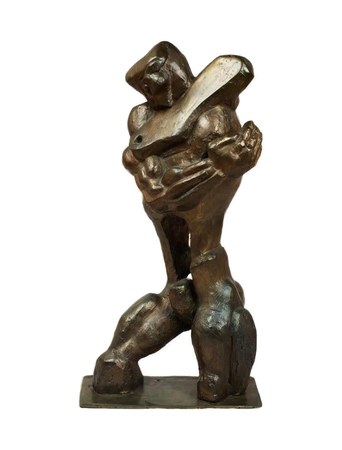
The centaur is one of Ernst Neizvestny's central motifs. He returned to it for many years, and his first biography was published under the title Centaur.
Neizvestny's centaur joins more than man and horse. The figure also has mechanical elements, and together they speak of the duality of human nature and the struggle of forces within one being.
The bronze in the Don Foundation collection is 57.2 cm tall and made in the sculptor's recognisable manner: powerful, tense forms, with the figure seeming to emerge from a dense, shapeless mass.
Neizvestny lived between two countries. He emigrated in 1976 and worked in Switzerland and the US, and in 1996 his Mask of Sorrow memorial to the victims of repression was unveiled in Magadan. The foundation holds three of his works: Centaur, Hermaphrodite and the 1960 etching Crucifixion.