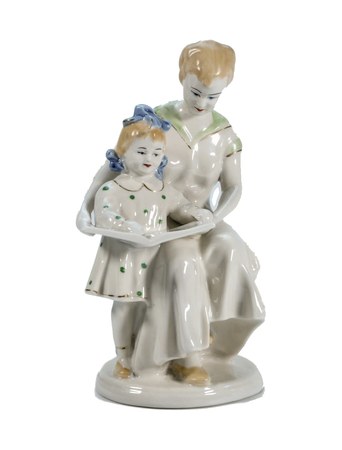
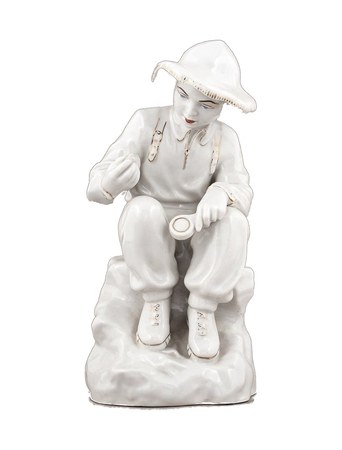
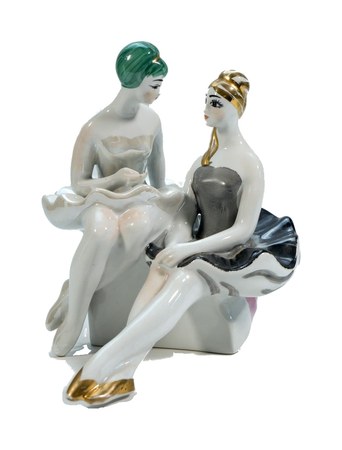
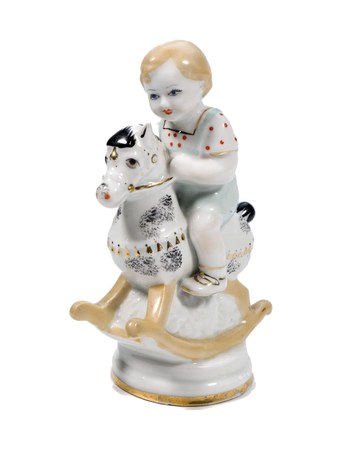
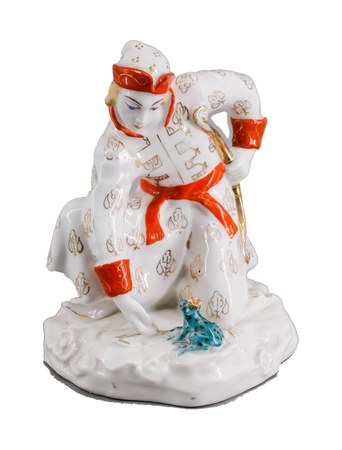
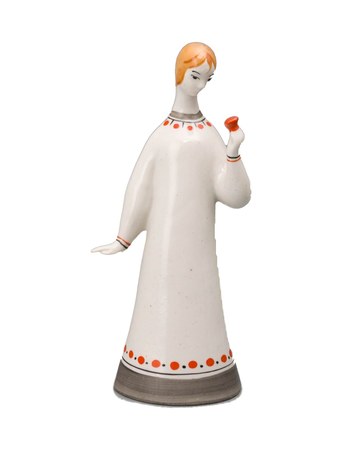
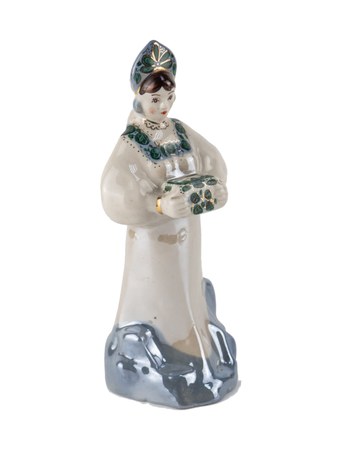
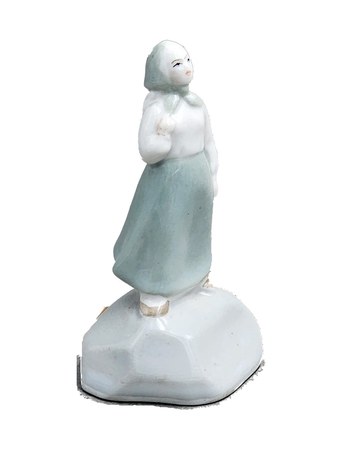
LFZ – Lomonosov Porcelain Factory, Leningrad
72 lots
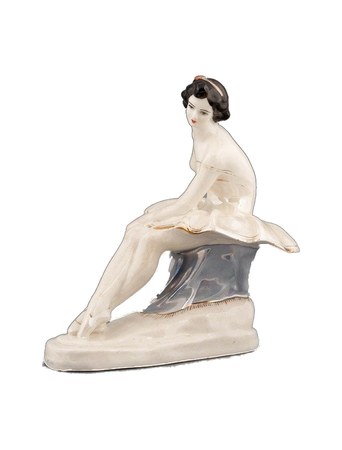
Founded in St Petersburg in 1744, the factory bore the name of Mikhail Lomonosov from 1925 to 2005 (its wares were marked “LFZ” from the 1930s) and in 2005 regained its historic name, the Imperial Porcelain Factory. The lots include 1950s–1960s figures after models by Sofia Velikhova, Galina Stolbova, Boris Vorobyov and Efim Gendelman.
Polonne Art Ceramics Factory (ZKhK)
62 lots
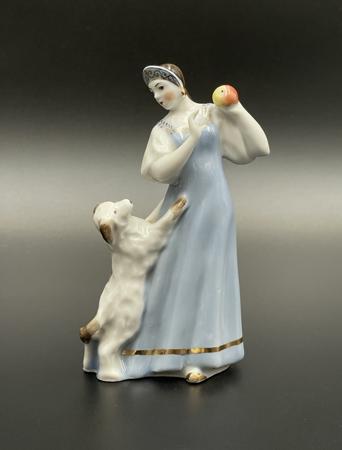
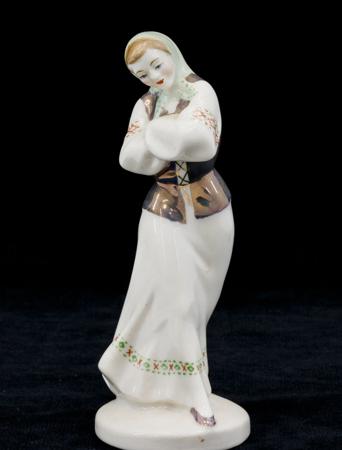
A factory in Polonne (Khmelnytskyi region, Ukraine): from 1927 the Keramik industrial artel, from 1956 the Polonne Art Ceramics Factory, marked “Polonne ZKhK”. It made small-scale porcelain sculpture – folk and literary characters, children and sport – and some of its models came from the Kyiv Experimental Ceramic and Art Factory.
Dulevo Porcelain Factory
34 lots
Founded in 1832 by the merchant Terenty Kuznetsov at Dulevo (now Likino-Dulevo, Moscow region); in Soviet times it was the Dulevo Porcelain Factory named after the newspaper Pravda. The lots include models by Asta Brzhezitskaya, Nina Malysheva, Pavel Kozhin, Alexei Sotnikov and Olga Bogdanova.
Kyiv Experimental Ceramic and Art Factory
23 lots
Founded in Kyiv in 1924 as an experimental workshop for ceramic paints; art porcelain production was set up in the mid-1940s, and the factory later moved to Vyshneve near Kyiv. Sculptors Oksana Zhnykrup, Vladyslav Shcherbyna and Olha Rapai worked here; production ceased in 2006.
LZFI – Leningrad Porcelain Works
16 lots
A Leningrad enterprise separate from LFZ: in the early 1950s the experimental plant of the GIKI ceramics institute, in 1956–1967 the Leningrad Porcelain Works (mark “LZFI”), later the Leningrad Experimental Plant (LOZ). Most of its figurines date from the 1950s–1960s; the lots include models by Anatoly Kiselyov and Tamara Fyodorova.
Sysert Porcelain Factory
15 lots
The Sysert factory (Sverdlovsk region) grew out of a ceramics artel set up in 1928; from 1960 to 1977 it was the Sysert Ceramic Products Factory, and from 1977 the Sysert Art Porcelain Factory. The lots include characters from Pavel Bazhov’s Ural tales, such as the Mistress of the Copper Mountain and Danila the Craftsman.
Gzhel – Khudozhestvennaya Keramika artel / Turygino factory
15 lots
The Khudozhestvennaya Keramika (Art Ceramics) artel was formed in 1937 in the village of Turygino (Ramenskoye district, Moscow region), became the Turygino Porcelain Factory around 1960 (mark “Gzhel TZ”) and joined the Gzhel production association in 1972. The lots include models by L. P. Azarova, N. B. Kvitnitskaya and T. N. Sapozhnikova.
Korosten Porcelain Factory
14 lots
A factory in Korosten (Zhytomyr region, Ukraine) founded in the early 20th century by the entrepreneur T. K. Przybylski; it had stopped production by 2012, and bankruptcy proceedings were opened that year. The lots include figures from the “Aeneid” series (after Ivan Kotliarevsky) and the “Sorochyntsi Fair” series (after Nikolai Gogol).
Dmitrov Porcelain Factory (Verbilki)
14 lots
A factory in Verbilki (Taldom urban district, Moscow region) founded in 1766 by Francis Gardner; nationalised after 1917 and known as the Dmitrov Porcelain Factory (DFZ; one of its marks reads “DFZ Verbilki”), it has operated as Farfor Verbilok since 1991. Lots described as “Dmitrov” and “Verbilki” come from the same factory and include models by Olga Artamonova and Sergei Orlov.
Horodnytsia Porcelain Factory
10 lots
A factory in Horodnytsia (Zhytomyr region, Ukraine) founded in 1799 by Prince Józef Klemens Czartoryski; from the 1930s it made tableware and small-scale sculpture. Production stopped in 2008, and the factory was declared bankrupt in 2012.
Bronnitsa (Novgorod region)
9 lots
The Vozrozhdenie porcelain factory opened in the village of Bronnitsa (Novgorod region) in October 1966, set up from a workshop of the Proletariy factory; it made souvenir porcelain – cobalt-blue tableware and small figurines – and ceased operating in 2004. Lots from the 1940s–1950s are older than the factory: they were made by local production, and the description of one of them names the district industrial works (raipromkombinat). Not to be confused with the town of Bronnitsy near Moscow.
Yerevan Faience Factory
8 lots
The Yerevan Faience Factory produced figurines designed by Armenian sculptors: Tereza Mirzoyan’s “Ballerina” (1956), Vahan Teruni’s characters from Hovhannes Tumanyan’s poem “Anoush”, and “David of Sassoun” by Arto Chakmakchyan and Vahan Stepanyan (from 1960). Examples of its work are held by the Yerevan History Museum.
Pervomaisky Porcelain Factory (Pesochnoye)
7 lots
A factory in Pesochnoye (Rybinsk district, Yaroslavl region): founded in 1884 by the merchant P. A. Nikitin as a brickworks, it made porcelain and faience from 1885 and passed to the M. S. Kuznetsov partnership in 1894; in Soviet times it was the Pervomaisky Porcelain Factory. Production stopped in 2012 and the factory was declared bankrupt in 2013.
Konakovo Faience Factory
6 lots
Founded in 1809 in the village of Kuznetsovo, Tver province (now the town of Konakovo); named after Mikhail Kalinin in the 1920s, with an art laboratory opened in 1934. Lots from this factory are faience, not porcelain.
Baranivka Porcelain Factory
6 lots
A factory in Baranivka (Zhytomyr region, Ukraine) founded in the early 19th century by Michal Mezer (sources give 1802 or 1804); it ceased to exist in 2013.
Riga Porcelain Factory (RPR)
5 lots
The former Riga works of the Kuznetsov family (from 1922 the joint-stock company M. S. Kuznetsov), nationalised in 1940; from 1946 the Riga Porcelain and Faience Factory, merged in 1963 with the former Jessen factory and renamed the Riga Porcelain Factory (RPR) in 1968. Its successor, the joint-stock company Rīgas porcelāns, was declared insolvent by a court in 1996, and the works closed in 1997.
Minsk Porcelain and Faience Factory
5 lots
A Minsk enterprise that grew out of a tile works founded in the 1880s; on 15 March 1951 it was renamed the Minsk Porcelain and Faience Factory, and from 1961 it operated as the Minsk Porcelain Factory. It closed in 2009.
Factories represented by five lots or more. Lot counts are based on the lot descriptions.